
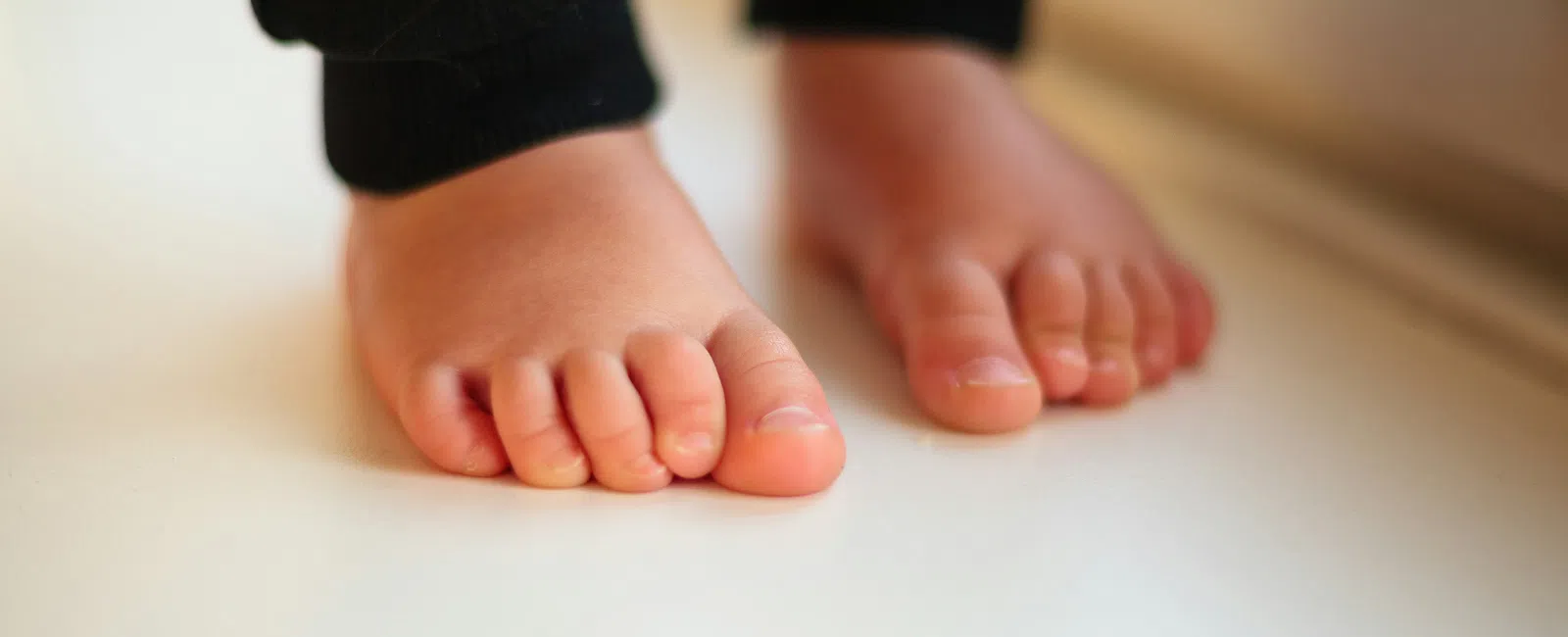
Toe walking is common in little ones who are still finding their feet, and most of the time it fades on its own. Sometimes, though, it sticks around, and many parents start to ask whether toe walking and autism are connected. The short answer is that they can be, but toe walking on its own does not mean your child is autistic.
What Is Toe Walking?
Toe walking means walking on the balls of the feet without the heels making regular contact with the ground. Plenty of children try it out when they first learn to walk, usually between 12 and 18 months, and for most, a typical heel-to-toe pattern takes over by age two. When a child keeps walking on their toes past that point and there is no clear medical reason, doctors often call it idiopathic toe walking, which is simply a way of saying the cause is not yet known. Toe walking in children can also be tied to muscle, nerve, or developmental differences, which is why a professional opinion matters when it continues.
Is Toe Walking a Sign of Autism?
Toe walking shows up far more often in autistic children than in their peers. Research consistently finds that walking on the toes is much more common among children on the spectrum than among typically developing children, which is why it often comes up as a topic worth understanding. Still, it is not a stand-alone sign. Clinicians look at toe walking alongside other early signs of autism, including delayed speech, limited eye contact, or repetitive movements, before considering an evaluation. On its own, tiptoeing is just one piece of a much bigger picture. If your child only toe walks occasionally and is meeting their other milestones, there is usually little reason to worry. The behavior becomes more meaningful when it shows up alongside other developmental differences.
Why Do Autistic Children Walk on Their Toes?
There is rarely a single reason. A few of the most common explanations include:
- Sensory differences. Many autistic children process touch and movement differently. Walking on toes can reduce uncomfortable input from the floor, or add the kind of pressure and feedback a child is seeking. Sensory processing differences often sit at the heart of the behavior.
- Balance and body awareness. The vestibular system helps us feel steady and sense where our body is in space. When it works differently, toe walking can become a way to feel more grounded and in control.
- Tight muscles. Long-term toe walking can shorten the calf muscles and Achilles tendon, which then makes flat-footed walking feel harder. Sometimes the tightness is the cause, and sometimes it is the result.
- Self-regulation and habit. Like rocking or hand flapping, tiptoeing can be calming. A child may do it more when they are excited, anxious, or overstimulated.
When Should You Talk to a Professional?
Occasional toe walking in a young child is usually nothing to worry about. It is worth checking in with your pediatrician or a specialist when you notice things like:
- Toe walking that continues past age two
- Walking on toes almost all the time, not just now and then
- Tight calves, or a child who cannot easily lower their heels to the floor
- Loss of balance, frequent falls, or stiffness in the legs
- Toe walking paired with other signs, such as speech delay or differences in how your child plays and connects with others
Trust your instincts here. If something feels off, an autism evaluation can give you real clarity instead of guesswork, and it opens the door to support if your child needs it.
How Toe Walking Is Supported
Support depends entirely on what is driving the behavior, which is why a proper assessment comes first. There is no single fix that works for every child, and the right approach for one family may look very different for another. A care team might include several people. Physical therapists work on gentle stretching to ease tight calf muscles. Occupational therapists help children who toe walk for sensory reasons find other ways to get the input they need. In some cases, a medical provider may discuss options like orthotics or bracing.
When toe walking is tied to sensory needs or self-regulation, ABA therapy can help as well. Rather than simply trying to stop the behavior, a skilled team looks at why it is happening and builds your child's comfort, body awareness, and communication so they have other tools to lean on. For toddlers and preschoolers, early support tends to make the biggest difference, and an Early Learners program focuses on these foundational skills during the years when they matter most.
How Elevation Autism Can Help
At Elevation Autism, our BCBA-led team gets to know your child before recommending anything. We provide autism evaluation and diagnosis, individualized ABA therapy, and speech therapy across our North Georgia clinics. If toe walking is one of several things you have been wondering about, we can help you understand the full picture and map out the next steps that fit your family.
Curious whether your child's toe walking is worth exploring further? Book an evaluation or call us today; we are here to help your child build confidence, one step at a time.


